 Michail Ouroumis
Why I Built a Free Learning Platform (and What I Learned)
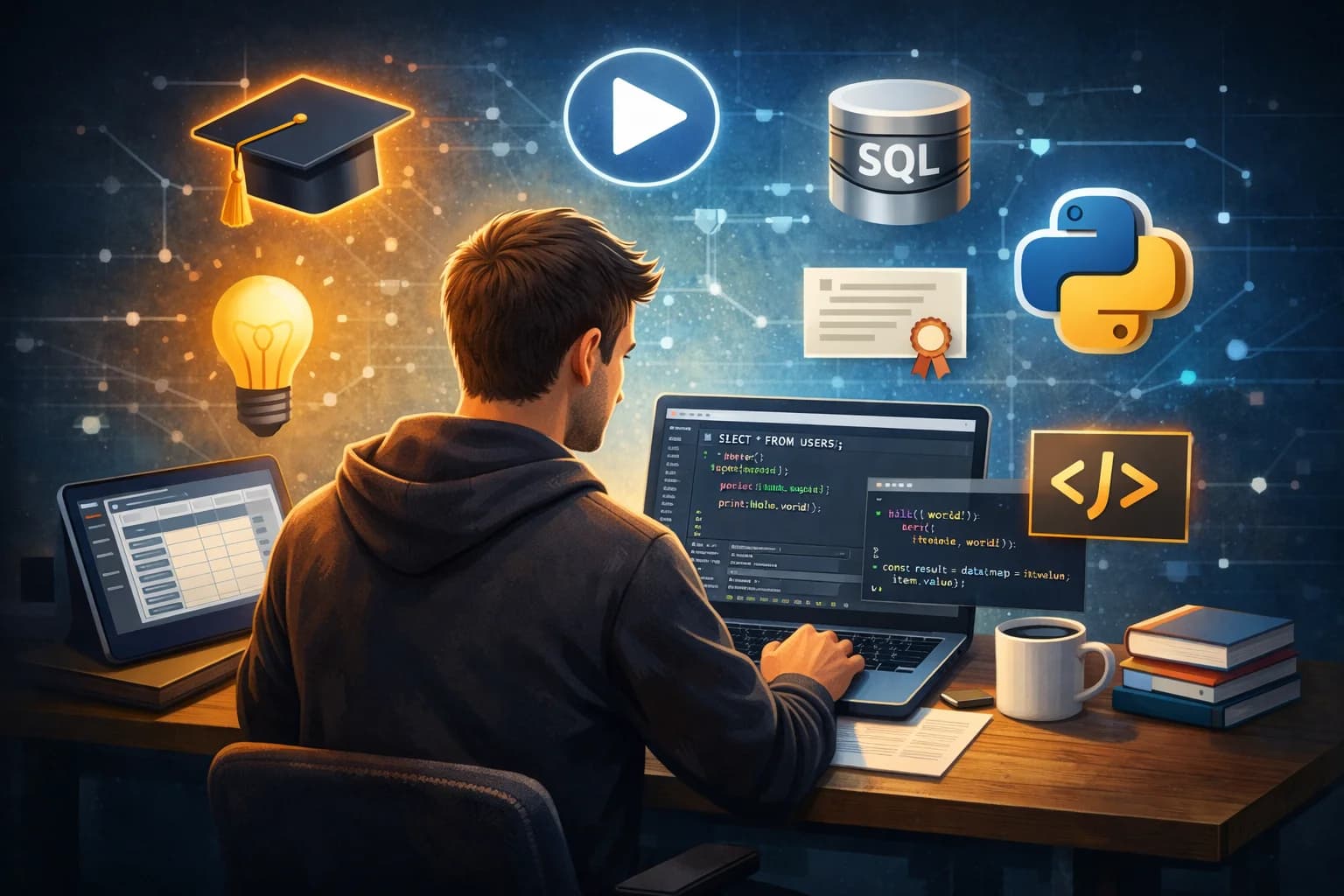
Back in 2024, I found myself frustrated. I wanted to learn more about SQL optimization and AI fundamentals, but every promising course seemed to hide behind a paywall. $99 here, $199 there, monthly subscriptions everywhere. Don't get me wrong—creators deserve to be paid for their work. But I kept wondering: what about developers in countries where $99 is a month's salary? What about students who can't afford yet another subscription?
That frustration became the seed for FreeAcademy.
The Problem I Saw
The tech education landscape has a pricing problem. Great content exists, but it's increasingly locked behind:
- Premium course platforms charging $200+ per course
- Monthly subscriptions that stack up across multiple platforms
- Certificate programs where you pay mostly for the credential, not the knowledge
Meanwhile, documentation is free but often scattered. YouTube tutorials exist but lack structure. Blog posts help but don't provide hands-on practice.
I kept thinking: what if there was a platform that combined the structure of paid courses with the accessibility of free content? What if you could actually run code examples right there in the browser, without setting anything up?
The Decision to Build
I've been building web applications professionally for years. I had the skills. I had the frustration. The only question was: could I actually deliver something useful?
In early 2024, I started sketching out what would become FreeAcademy.ai. The core principles were:
- 100% free forever — no paywalls, no "premium tiers," no "first chapter free"
- Interactive from day one — learners should write and run code, not just read about it
- Real-world focus — practical skills over theoretical concepts
- No account required to start learning (though progress tracking needs one)
Technical Decisions That Shaped the Platform
Building an educational platform isn't just about content—the technical architecture determines what's possible.
Next.js with App Router
I chose Next.js for its flexibility. The App Router gives me server components for fast initial loads, client components for interactivity, and seamless API routes for backend functionality. Course content uses MDX, allowing me to embed React components directly in lessons.
Supabase for Everything Backend
Rather than cobbling together authentication, database, and storage from different providers, I went with Supabase. It handles:
- User authentication (email, GitHub, Google)
- PostgreSQL database for courses, progress, and certificates
- Row-level security so users only access their own data
- Real-time subscriptions for live updates
This let me focus on the learning experience rather than infrastructure.
Interactive Code Playgrounds
This was the challenging part—and the most rewarding to build. I wanted learners to actually execute code in the browser, without any setup.
For SQL, I integrated sql.js, which compiles SQLite to WebAssembly. Learners can write queries against pre-loaded datasets and see results instantly. Try it yourself in the Interactive SQL Practice course.
For JavaScript and TypeScript, the browser's native capabilities handle execution, with sandboxing for safety.
For Python, I built a playground that lets learners experiment with code right in the browser—perfect for courses like Python Basics and Data Analytics with Python.
The result: you can go from reading about a concept to running code in seconds, all without leaving the page.
Challenges and Lessons Learned
Content Creation Is Hard
Writing one good lesson takes longer than writing one good feature. I initially underestimated how much work goes into creating clear, progressive educational content. Each lesson needs:
- Clear explanations
- Practical examples
- Exercises that reinforce concepts
- Just enough challenge without frustration
I've learned to focus on depth over breadth. A few excellent courses are worth more than dozens of mediocre ones.
The Hybrid Content System
Early on, I built a purely file-based system using MDX. It worked, but updating content meant redeploying the app. Now FreeAcademy uses a hybrid approach:
- MDX files for stable, foundational content
- Database content via an admin panel for rapid updates
This lets me fix typos instantly while keeping version control for major content.
Performance Matters
Educational platforms need to be fast. Learners drop off when pages take too long to load. I've spent considerable time on:
- Image optimization (WebP everywhere)
- Code splitting per course
- Edge caching for static content
- Lazy loading for code playgrounds
Building Alone Is Slow
I'm the only developer on FreeAcademy. That means every feature, every bug fix, every content update falls on me. It's taught me to ruthlessly prioritize and to build systems that scale without constant maintenance.
What's Available Now
FreeAcademy currently offers courses across several areas:
Programming Fundamentals:
- JavaScript Essentials — core concepts every developer needs
- TypeScript Fundamentals — type safety for JavaScript
- Python Basics — programming from scratch
Data and Databases:
- SQL Basics — querying data effectively
- Interactive SQL Practice — hands-on exercises with immediate feedback
- Pandas Data Wrangling — Python data manipulation
AI and Machine Learning:
- AI Essentials — understanding modern AI
- Prompt Engineering — getting better results from LLMs
- Machine Learning Fundamentals — the concepts behind ML
Web Development:
- Next.js Mastery — building modern React applications
- Git Essentials — version control basics
- Supabase Fundamentals — backend development simplified
Every course includes quizzes, progress tracking, and—where applicable—interactive playgrounds.
What's Next
FreeAcademy is a living project. Here's what I'm working on:
- More interactive content — expanding playgrounds to more courses
- Certificates — verifiable credentials for completed courses
- Community features — discussion forums, Q&A, peer learning
- New course tracks — data science, system design, cloud computing
Why Free?
People ask me this regularly. The honest answer: because I can.
I have a career as a software developer. Building FreeAcademy doesn't need to pay my bills. What it does pay is the satisfaction of knowing that someone in Lagos or Hanoi or São Paulo can learn the same skills as someone in San Francisco—without the financial barrier.
Education shouldn't be a privilege. The knowledge is out there. The documentation exists. I'm just packaging it in a way that's structured, interactive, and accessible.
Try It Yourself
If you've made it this far, thank you for reading my story. Now go check out FreeAcademy.ai and let me know what you think.
Start with whatever interests you:
- Curious about databases? Try SQL Practice
- Want to build modern web apps? Start with JavaScript Essentials
- Interested in AI? Check out Prompt Engineering
Everything is free. No credit card. No "limited trial." Just learning.
And if you find value in what I've built, the best way to support me is to share it with someone who could use it. That's the whole point.
Questions about FreeAcademy or suggestions for new courses? Get in touch.